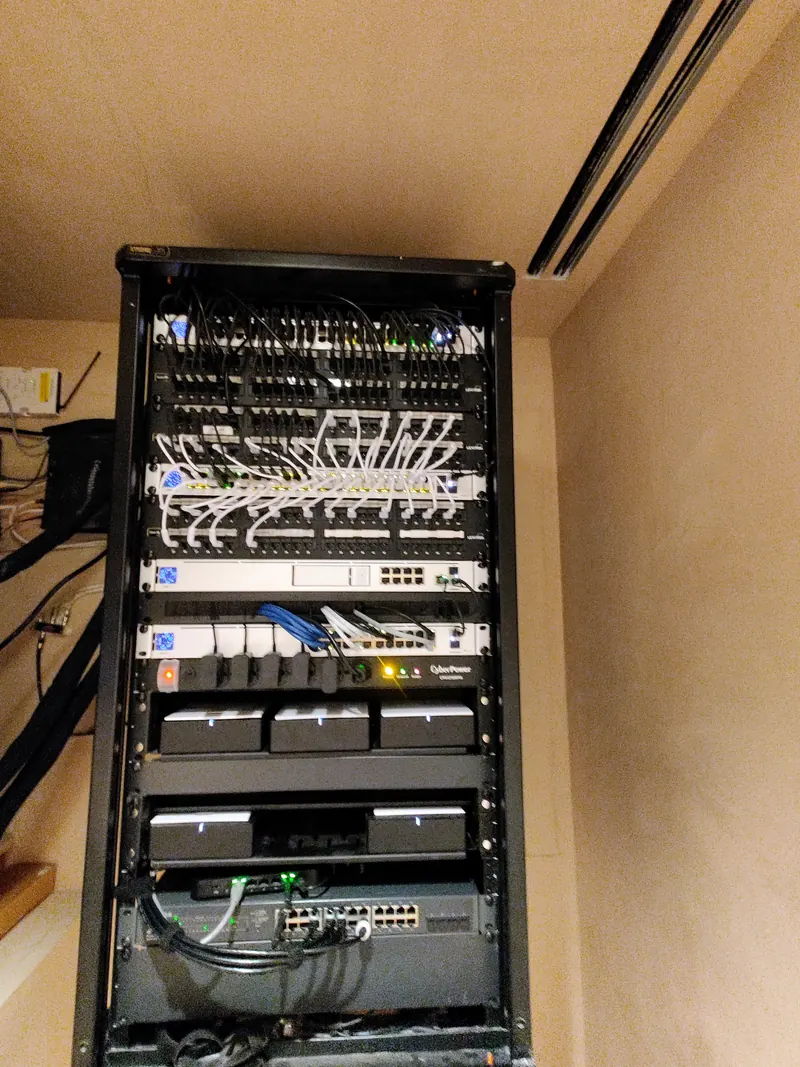
Structured Cabling & Low-Voltage Wiring
Cat 5e/6/6A/7/8, single-mode and multi-mode fiber, coax, speaker wire, fire and burglar alarm cable, paging, intercom, and HDMI/HDBaseT — designed, pulled, terminated, certified, and documented across NYC and NJ.
Written quote in 48 hours on every project — and managed clients get our published SLA: 14-min average response, 30-day out clause.
What's included
- Cat 5e, Cat 6, Cat 6A, Cat 7, and Cat 8 copper data cabling
- OS2 single-mode and OM3/OM4 multi-mode fiber (LC, SC, ST, MTP/MPO)
- RG-6 and RG-11 coax for CATV, SDI surveillance, and broadband
- 14/16/18-gauge speaker wire and 70V/100V distributed audio
- Fire alarm cable (FPLR / FPLP) pulled in coordination with your licensed fire alarm contractor
- Burglar / intrusion alarm cable (NEC Article 725 low-voltage)
- Paging, intercom, and door-bell cable
- HDMI fiber extenders and HDBaseT category cable
- Plenum (CMP / FPLP) and riser (CMR / FPLR) rated cable for code compliance
- Pathway hardware — EMT conduit, J-hooks, ladder rack, cable tray, fire-stop sleeves
- Server room and IDF / MDF buildouts with grounding and bonding (TGB / TBB)
- Cable certification per drop with documented test reports (Fluke DSX-8000)
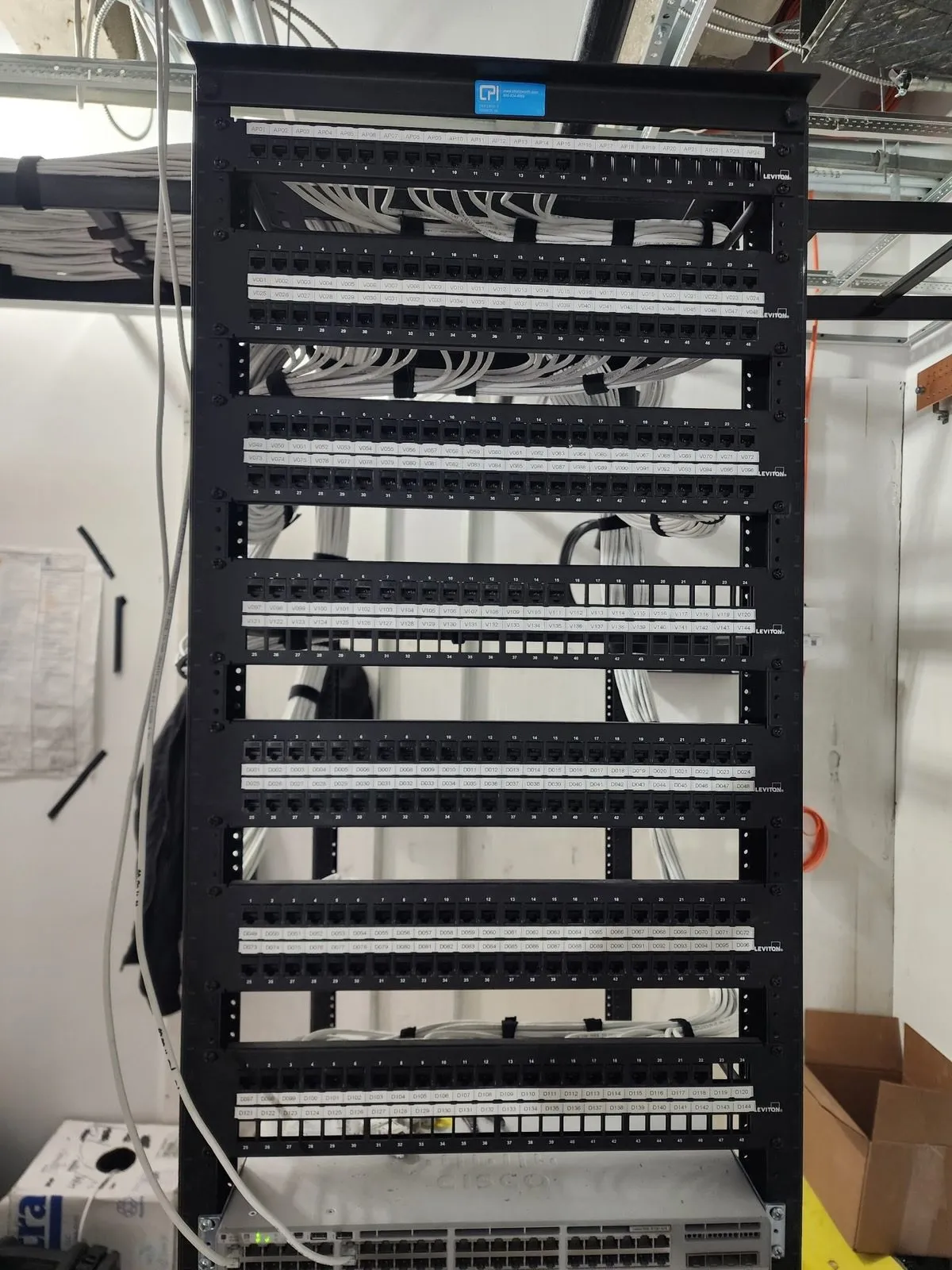
- As-built drawings, labeled patch panels, and TIA-606-compliant labeling
- BICSI-standard installation (TIA-568, TIA-569, TIA-606, TIA-607)
- New construction, tenant fit-out, retrofit, and emergency repair
Cabling that does not become someone else’s problem
Cabling is invisible when done right. It is everyone’s problem when done wrong. We install to BICSI standards, certify every drop with a Fluke tester, label both ends per TIA-606, and hand you a documented as-built drawing. The next time you call any IT vendor, they will know exactly what is in the walls.
Every cable type you actually need in one stack
Most low-voltage shops are good at one thing — data cabling, or AV cabling, or alarm cabling. We pull all of it on one project, with one foreman, one labeling system, one as-built drawing, and one certification package.
Data cabling — Cat 5e is end-of-life for new installs. Cat 6 supports gigabit and short-run 10 G. Cat 6A is our default for new construction in 2026 — 10 Gbps over the full 100 m, plenum-rated for ceiling plenums (CMP) or riser-rated for verticals (CMR). Cat 7 and Cat 8 for data center patch cords and specialty runs.
Fiber optic — OM3 and OM4 multi-mode for inside-building backbone (LC connectors most commonly, with MTP/MPO for high-density data center work). OS2 single-mode for site-to-site, campus, and any run over 300 meters. OTDR-tested on every run; certified test reports per drop.
Coax — RG-6 for residential and light-commercial CATV, broadband, and CCTV. RG-11 for longer runs above 250 ft where signal loss matters. F-connectors for CATV, BNC for SDI surveillance and broadcast, compression tools rather than crimp where the install warrants.
Speaker wire and distributed audio — 14, 16, and 18 AWG for line-level, 70V and 100V for distributed audio across restaurants, retail, lobbies, gyms, and open offices. CL2 and CL3-rated jackets where required by code. We run cable, install the speakers (in-ceiling, pendant, surface-mount, outdoor), terminate to amplifier or DSP, and hand off the head-end commissioning to the Commercial AV team.
Fire alarm cable — FPLR and FPLP per NEC Article 760, pulled in coordination with your licensed fire alarm contractor. They own the panel, devices, terminations, and the AHJ inspection. We own the pathway: conduit coordination with the electrician, fish-tape work, fire-stop where the cable crosses rated walls, and labeling. This split keeps the licensure clean on NYC and NJ commercial buildouts.
Burglar and intrusion alarm cable — low-voltage shielded twisted pair (typically 22-AWG, 4-conductor) per NEC Article 725, for door contacts, glass-break, motion sensors, and keypad runs. We coordinate with your monitoring vendor on terminations.
Paging, intercom, and door-bell cable — separate runs to keep the analog-paging signal isolated from data, terminated at the head-end where the paging amplifier and zoning live.
HDMI fiber and HDBaseT — HDMI over copper hits its wall at about 50 ft for 4K. We install HDMI fiber extenders (typically OM3 with HDMI 2.0 / 2.1 transceivers) or HDBaseT category-cable extender pairs over Cat 6A for runs to displays in distant conference rooms, lobbies, and digital signage zones.
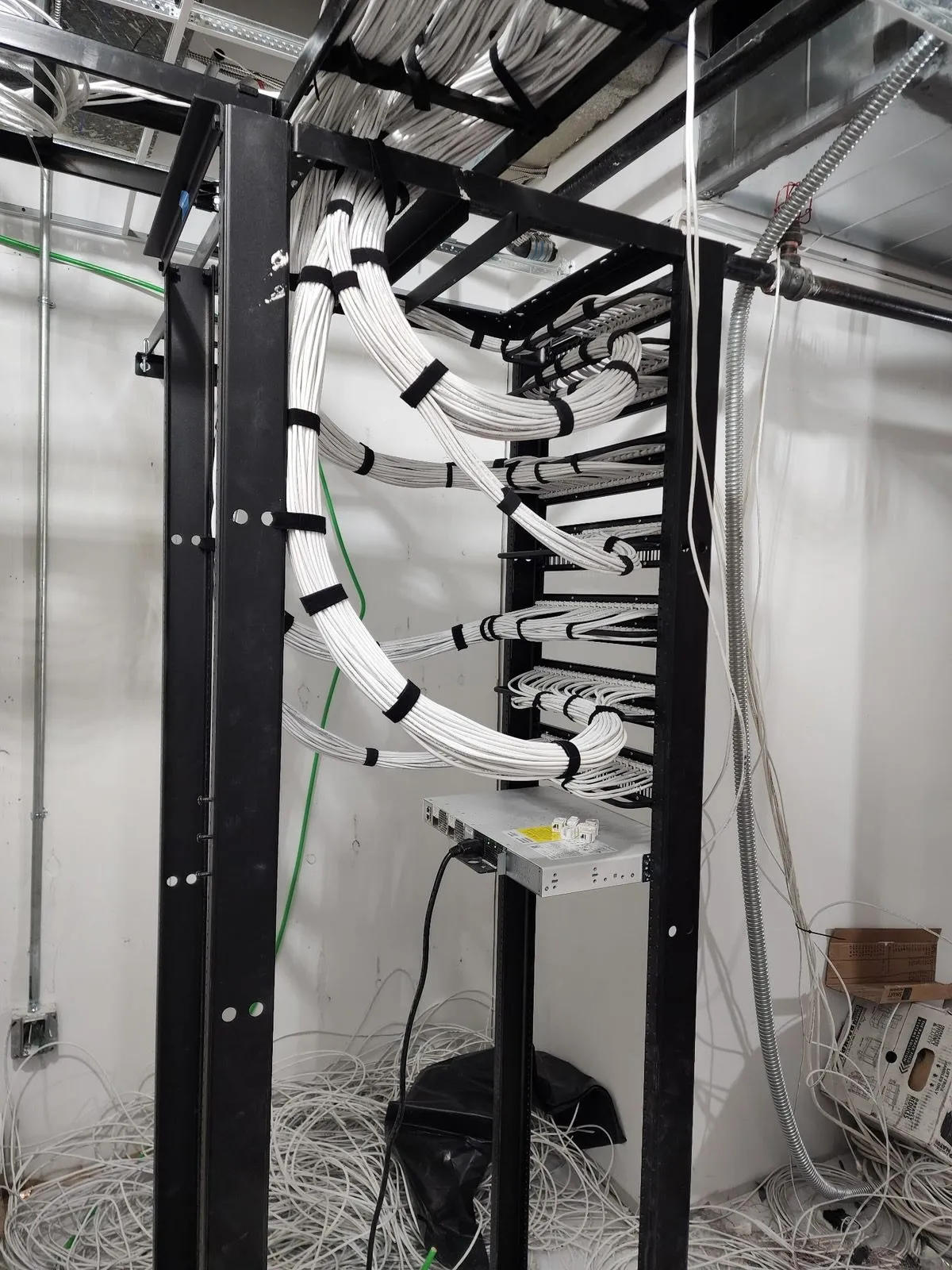
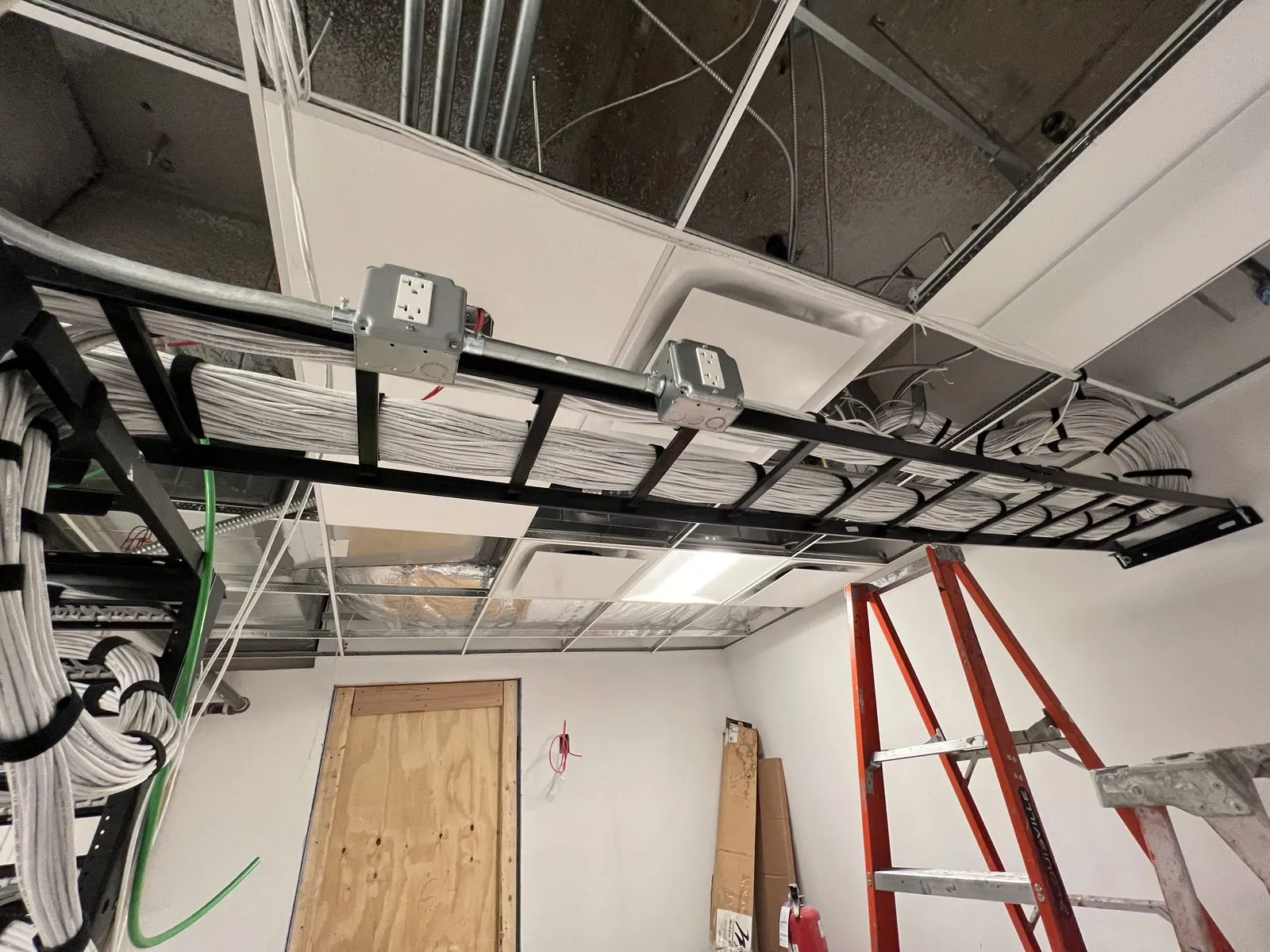
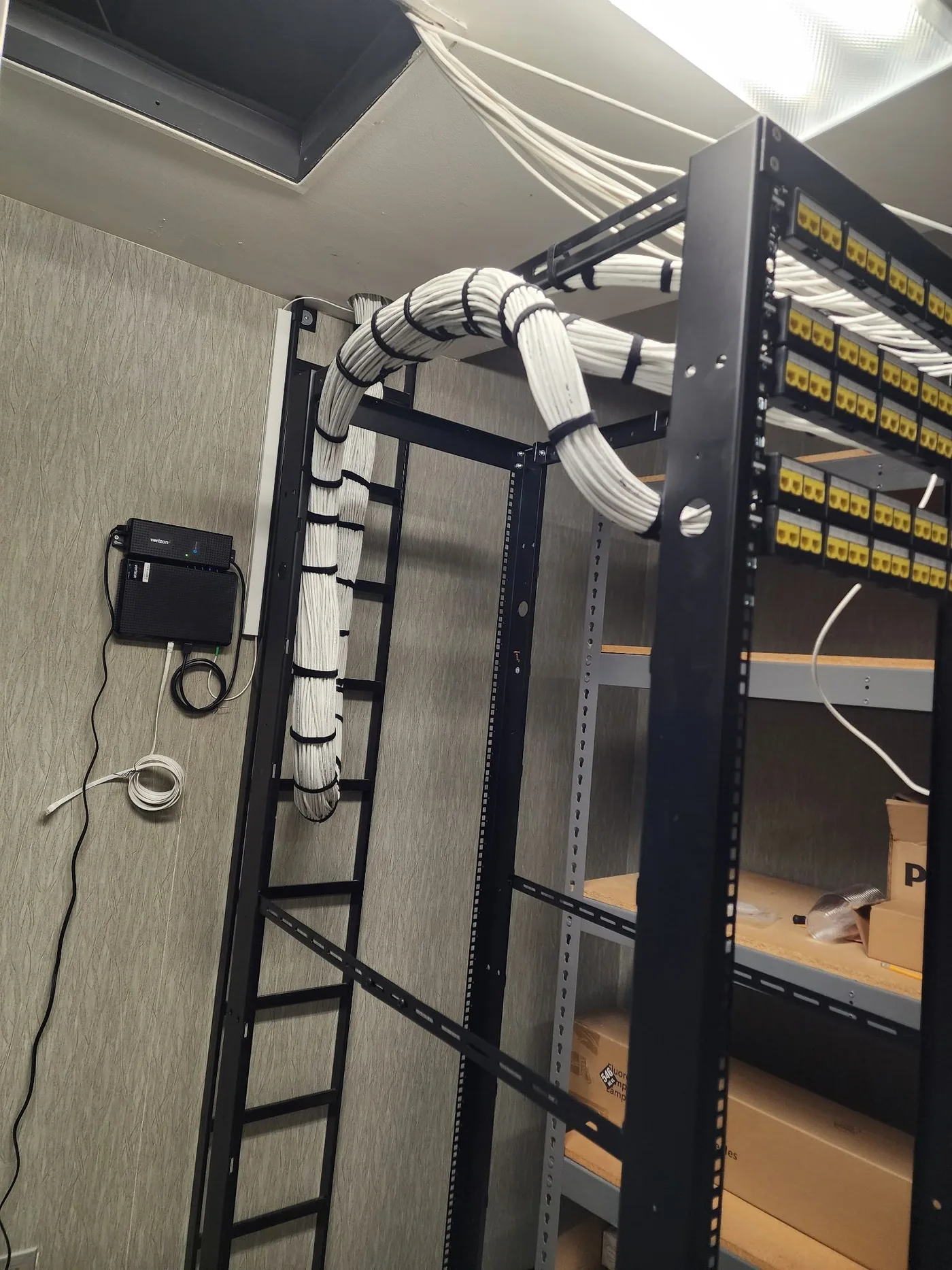
Pathway hardware — EMT conduit where the AHJ requires it. J-hooks above suspended ceilings every 4–5 ft per BICSI. Ladder rack in IDFs and MDFs. Cable tray in larger backbone runs. Fire-stop putty, pillows, and intumescent sleeves at every rated-wall penetration.
Server rooms and IDF / MDF builds
We design and build telecom rooms to BICSI TIA-569 standards. That includes properly sized racks (open four-post for switching, enclosed for any equipment with sensitive components), managed PDUs with monitoring, environmental sensors (temperature, humidity, water), labeled patch panels with documented port assignments, vertical and horizontal cable management, ladder rack for overhead pathways, grounding and bonding to a TGB and back to the TMGB, and proper clearance for service work. The room hands off to managed services with a network diagram, asset list, and rack-elevation drawing.
Where we work
New office buildouts (3,000 sq ft and up). Tenant fit-outs. Office relocations including phones, printers, conference rooms, and AV. Warehouse and distribution buildouts. Restaurant and retail openings (POS, paging, music, Wi-Fi, cameras together). Healthcare practice expansions. Multi-floor and multi-building campuses. Retrofits in landmark and converted-loft buildings where the existing pathways are constrained.
25-year manufacturer warranty
Sage is an authorized Panduit and Leviton installer. When we install a certified system using their components — cable, patch panels, connectors, faceplates — the manufacturer backs the installation with a 25-year system warranty. If a certified link fails within 25 years, the manufacturer covers material replacement and re-installation labor. The warranty is transferable if you sell the building or the lease.
Most cabling contractors buy commodity cable from electrical supply houses. That cable carries a 1-year manufacturer warranty on materials only — no labor, no system performance guarantee. The difference between a $3/ft install and a $4/ft install is a warranty that outlasts two full technology refresh cycles.
What the 25-year warranty covers: cable, patch panels, connectors, faceplates, and the certified link performance between them. If a Panduit or Leviton certified link fails to meet its rated performance (Cat 6A at 10 Gbps over 100 m, for example) within 25 years of installation, the manufacturer replaces the materials and covers the labor to re-pull and re-terminate. This is not a materials-only warranty — it is a system performance guarantee.
What you get when we walk off the job
A binder (PDF and printed) with: TIA-606 labeled patch panels and faceplates with matching as-built drawings; certification test reports per drop indexed to the drawings; equipment list with model numbers and serial numbers; pull schedule showing every run, length, and termination point; configuration backups for the active equipment; account credentials handed off to your password vault. The next IT vendor — even if it is not us — can pick up the system and run it cold.
From the field
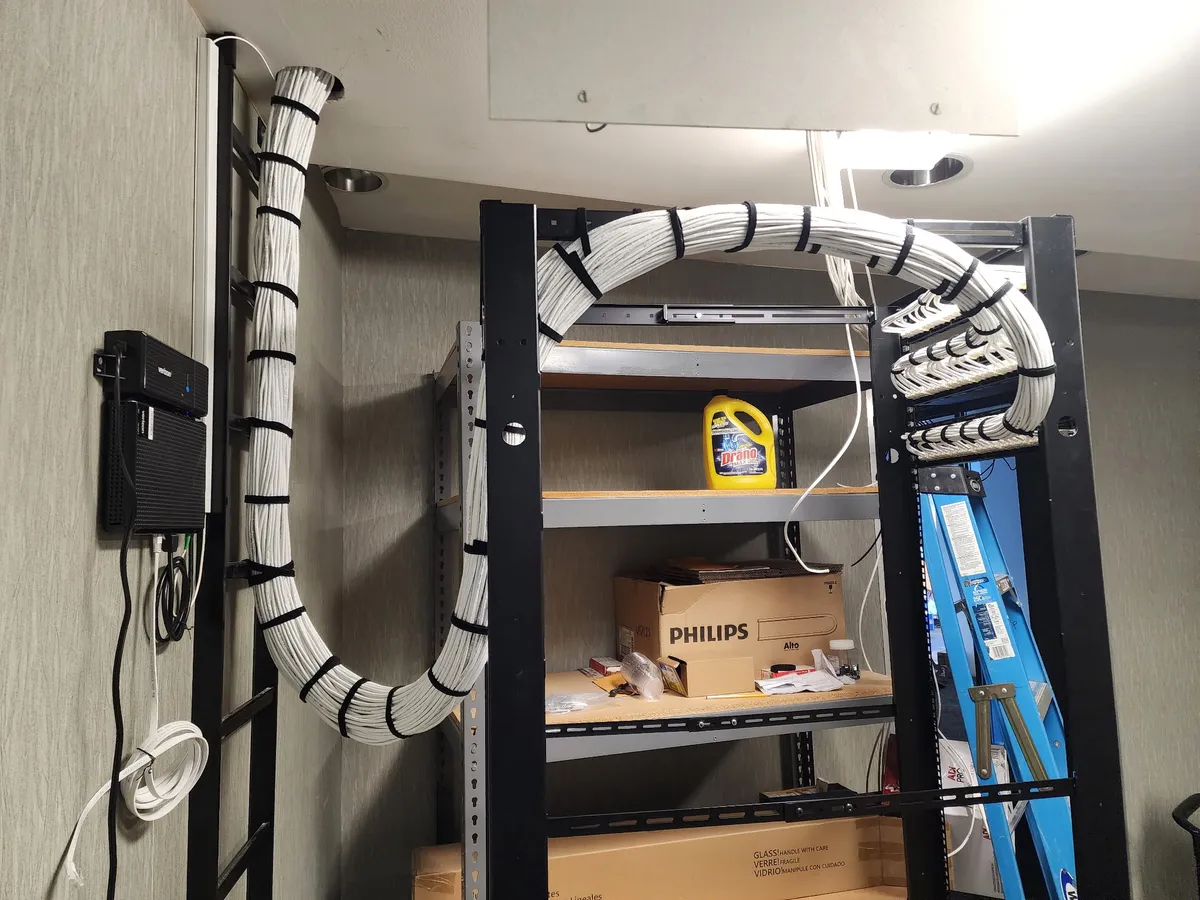
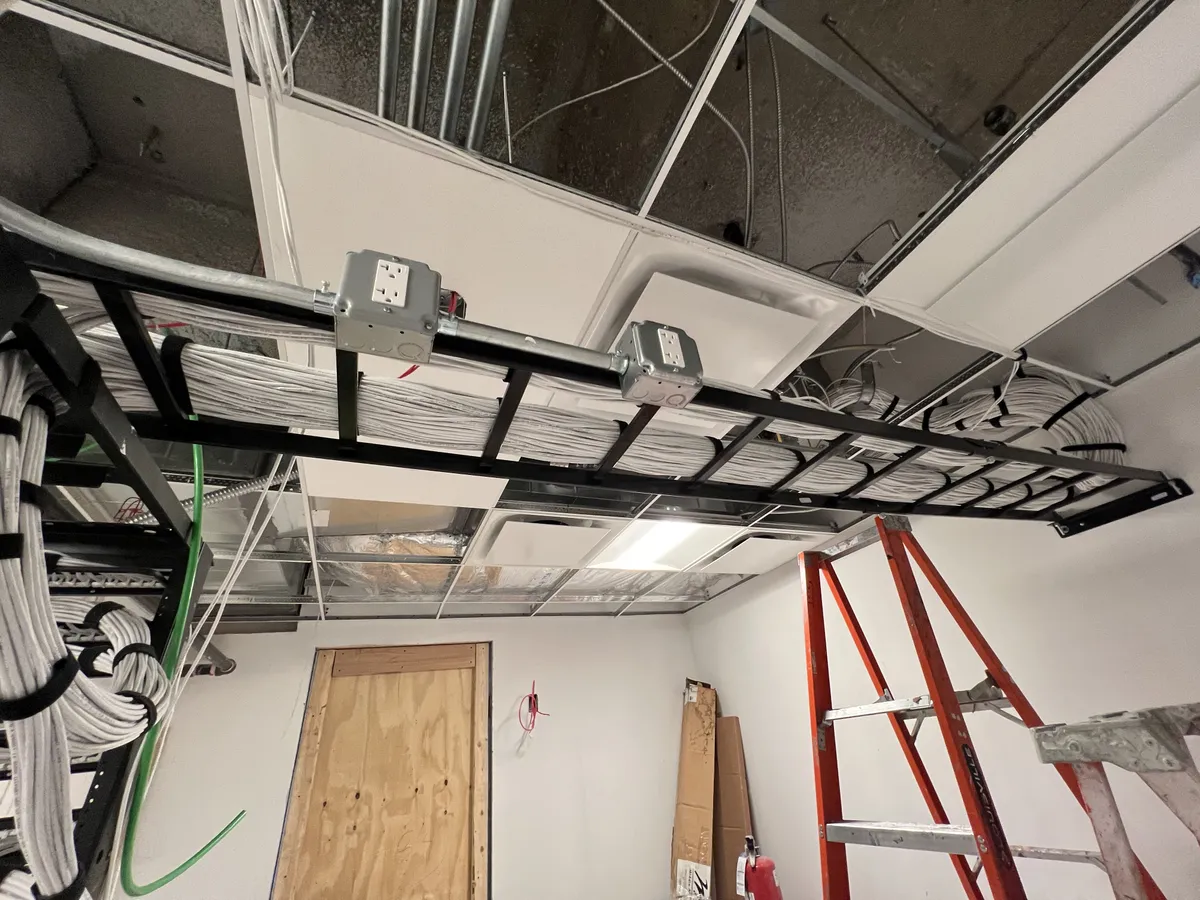
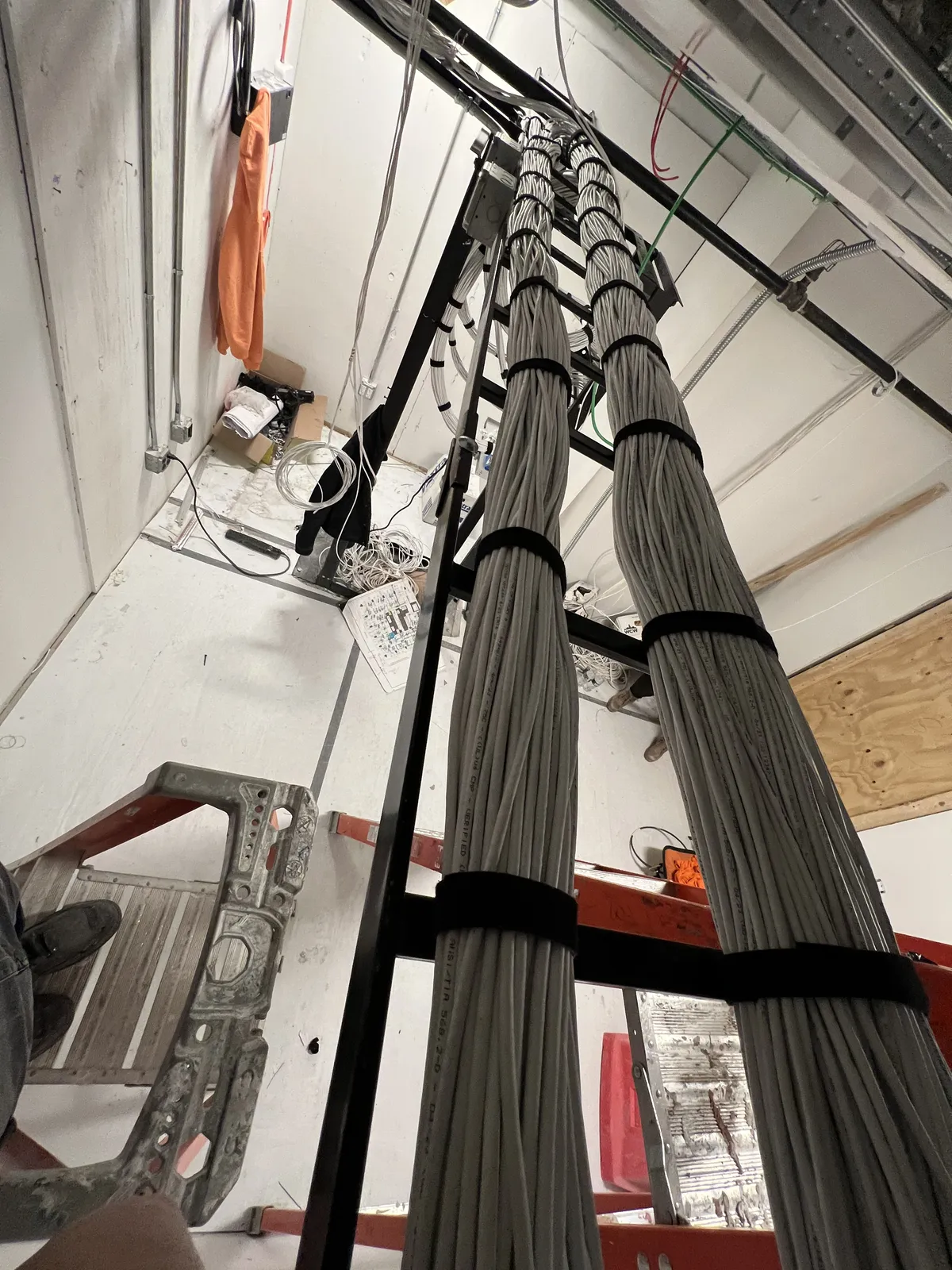
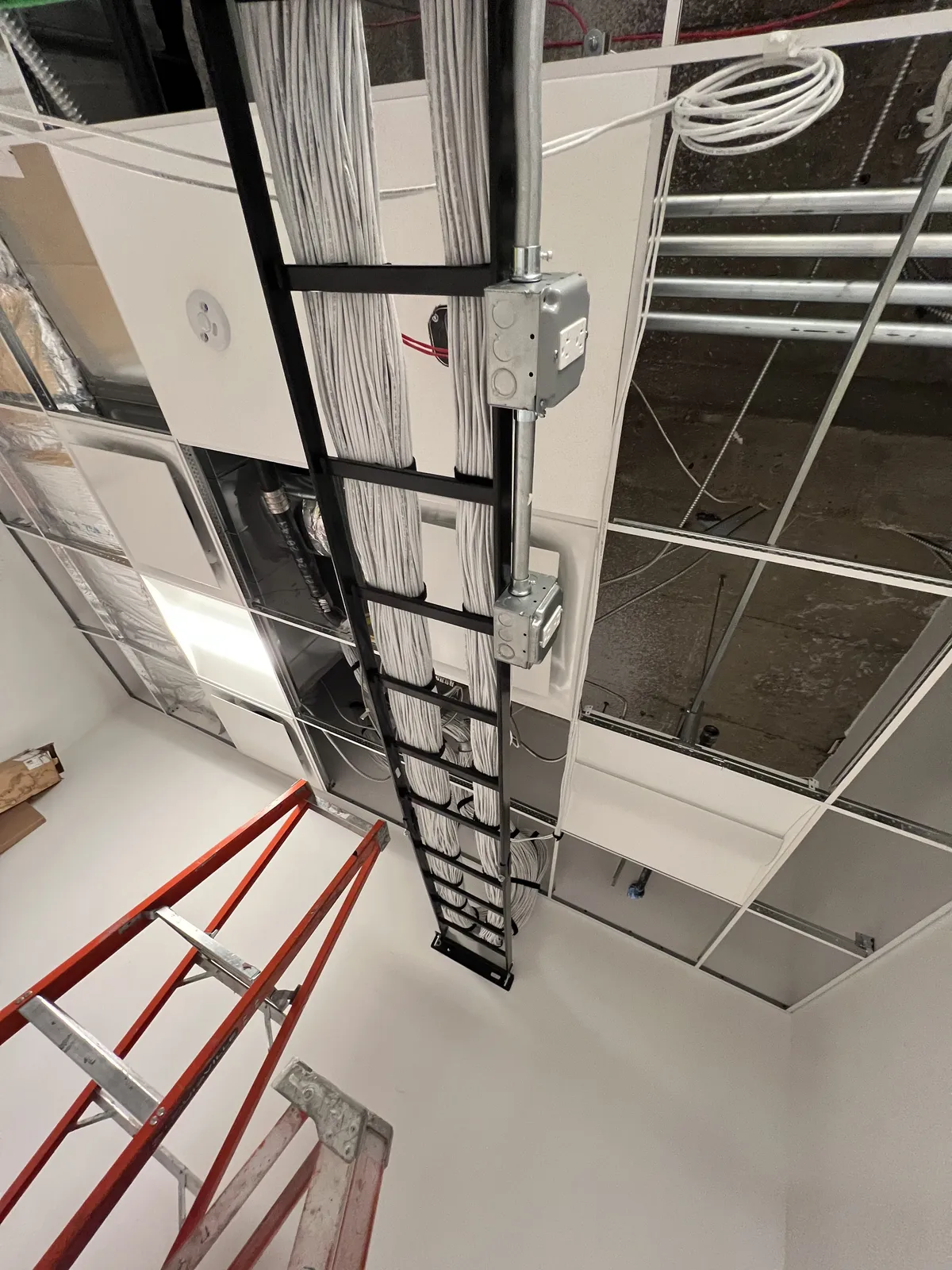
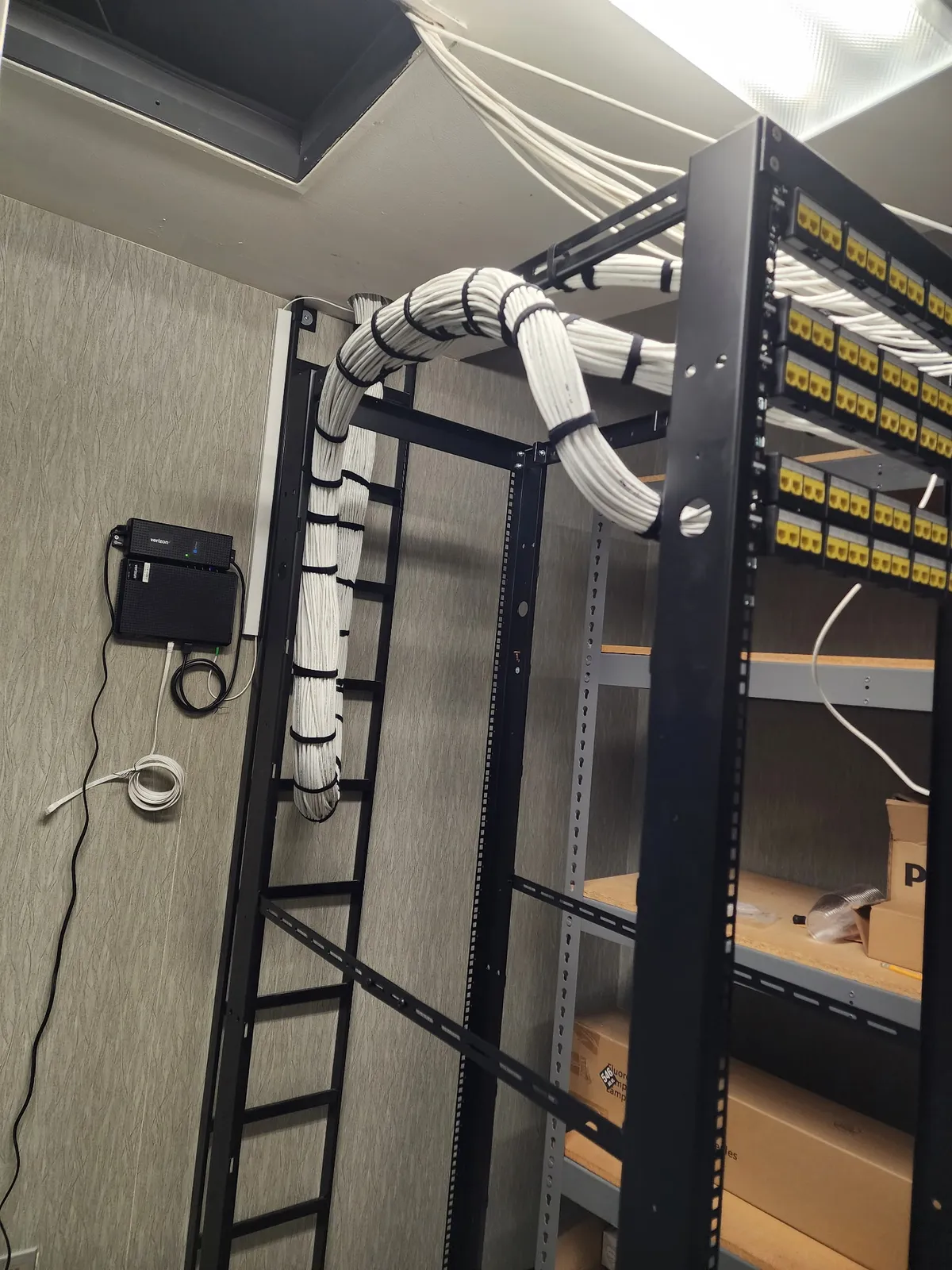
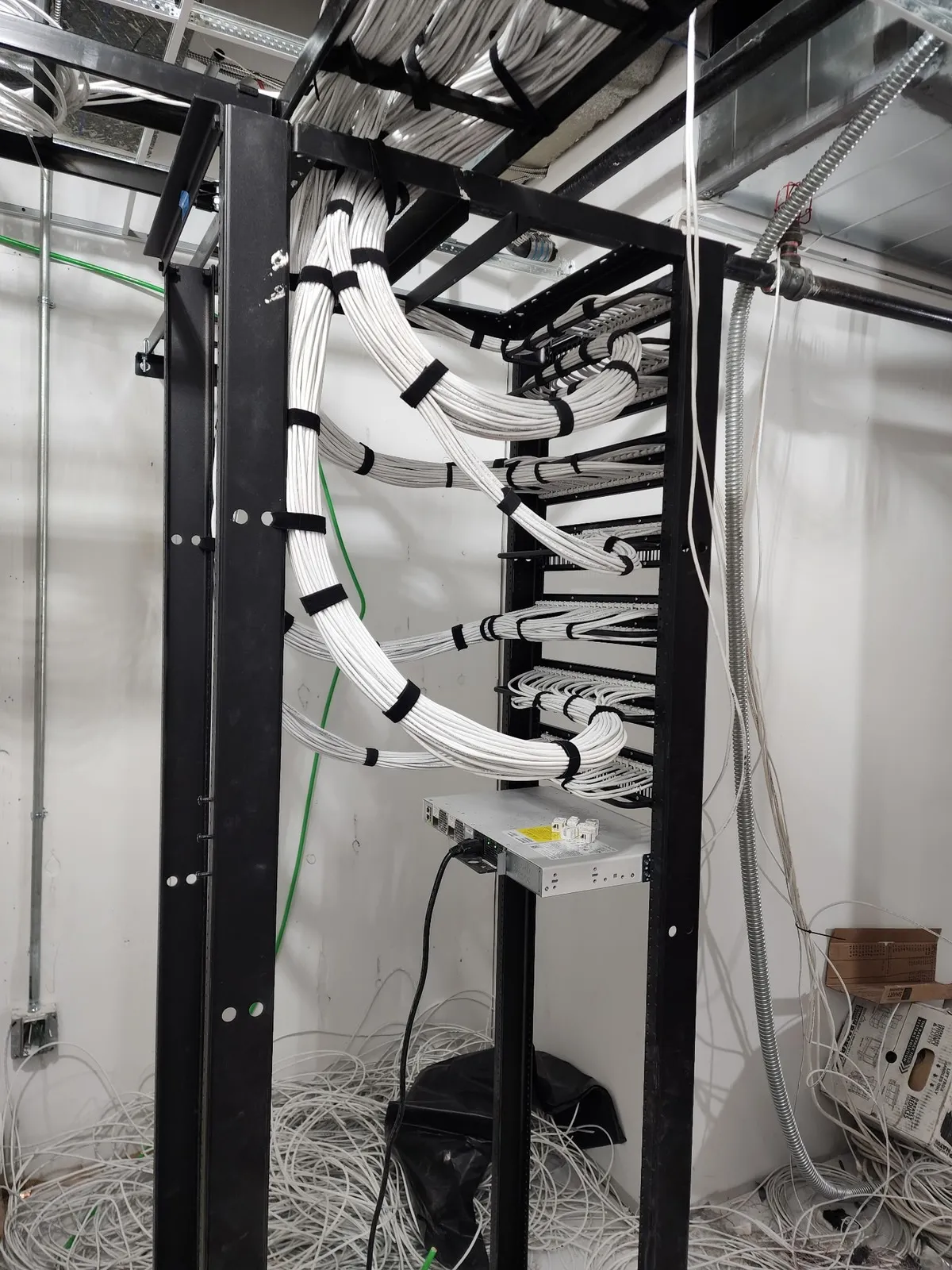
What it costs
Cabling is project-priced based on scope. The variables that move the number meaningfully are the cable type (Cat 6, Cat 6A, fiber, coax, speaker, fire and burglar alarm), the construction type (drop ceiling vs. sheetrock vs. exposed concrete vs. landmark wall), the run lengths and pathway count, certification scope, and after-hours / freight-elevator / certificate-of-insurance coordination. Use the cabling cost calculator for a budgetary range, or request a written quote — we walk the site, document the variables, and itemize every line before the work starts.
From our installs
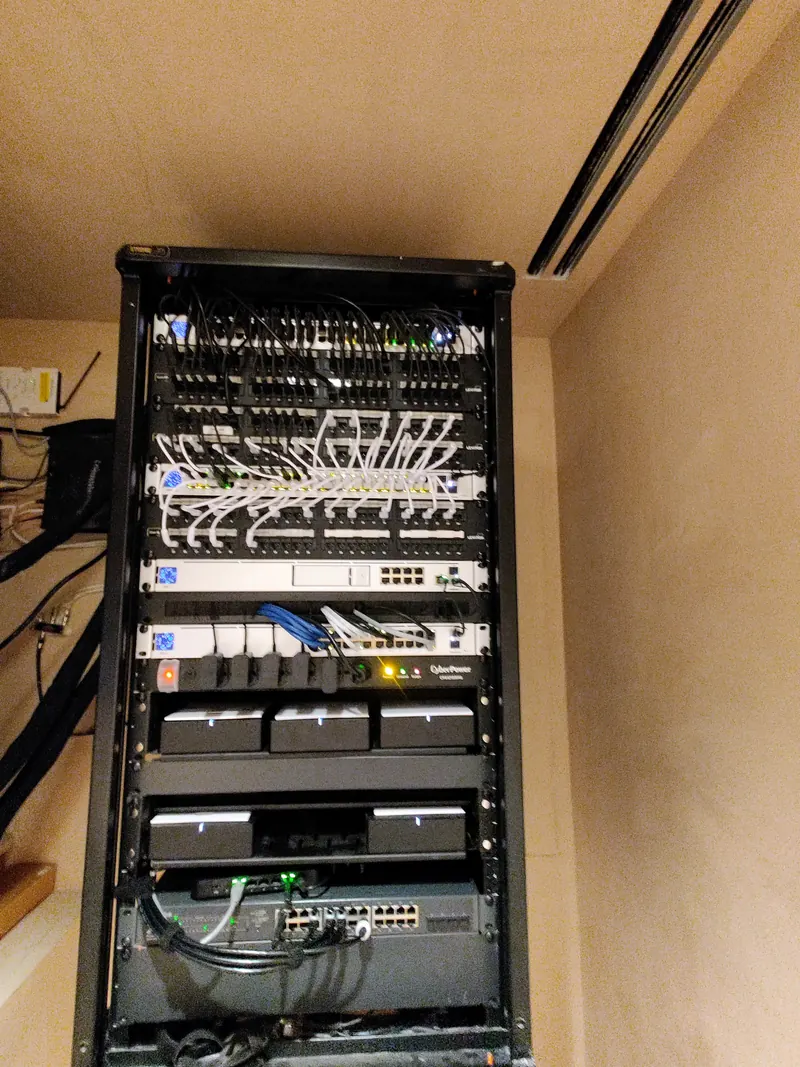
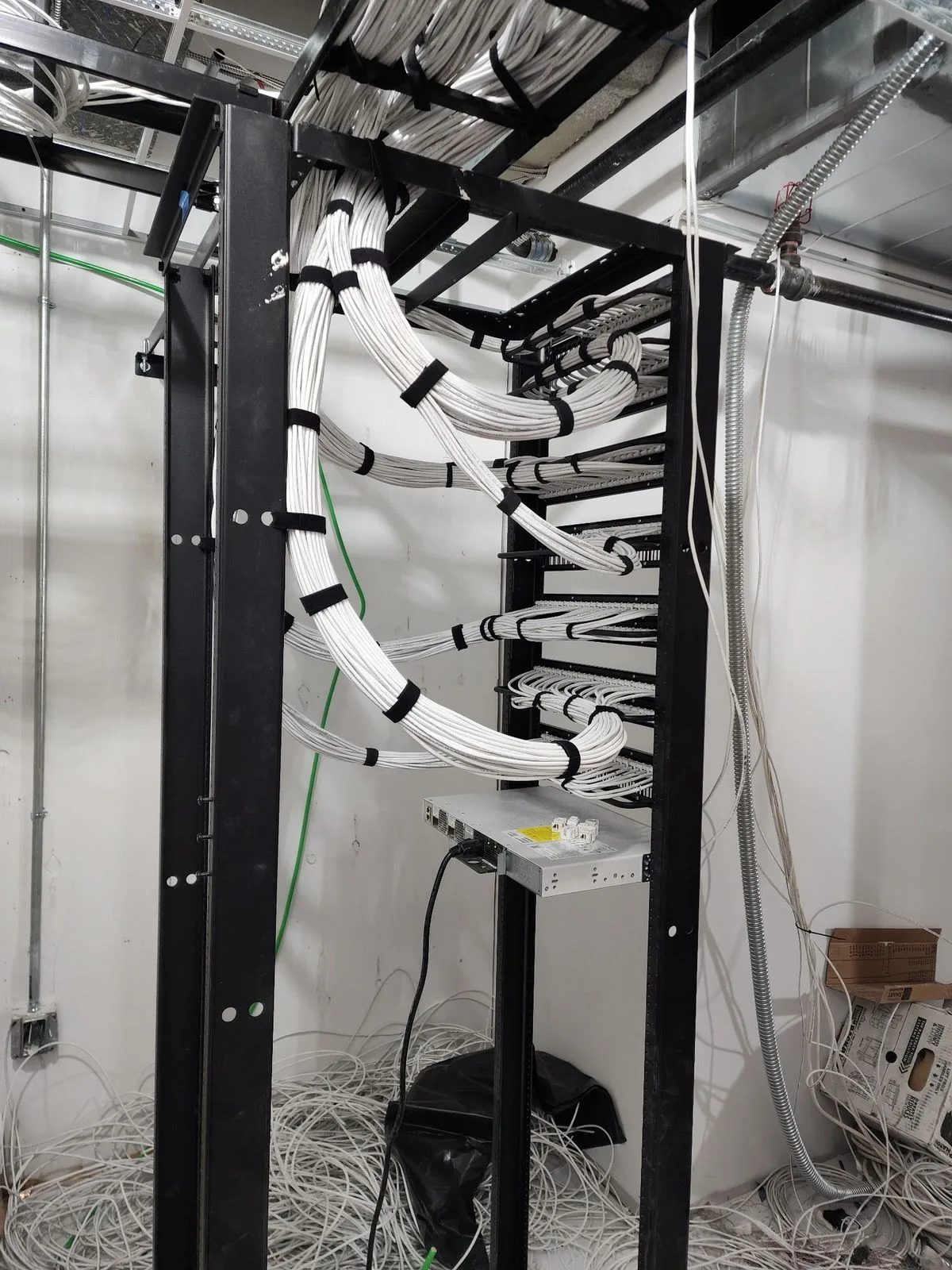
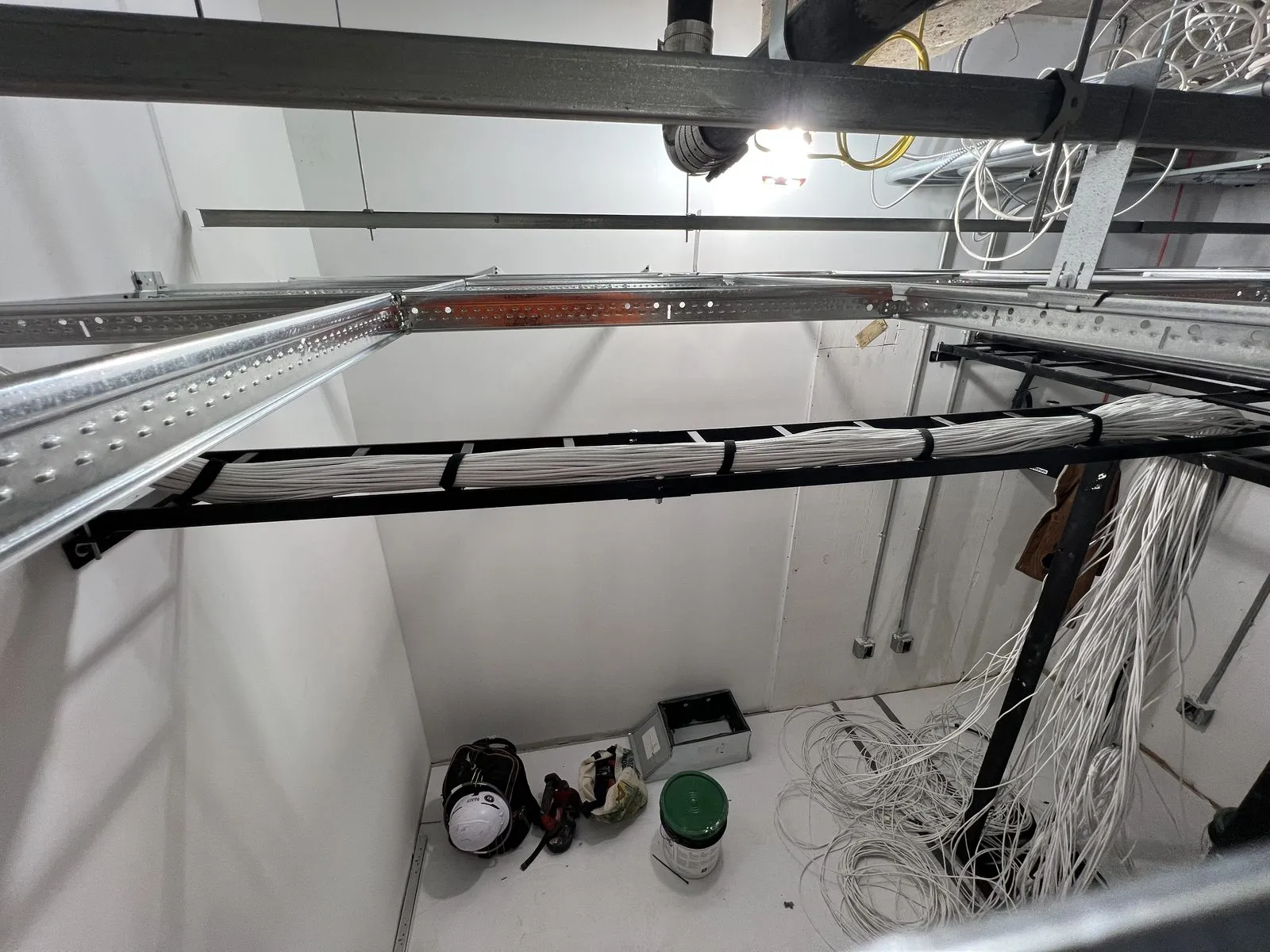
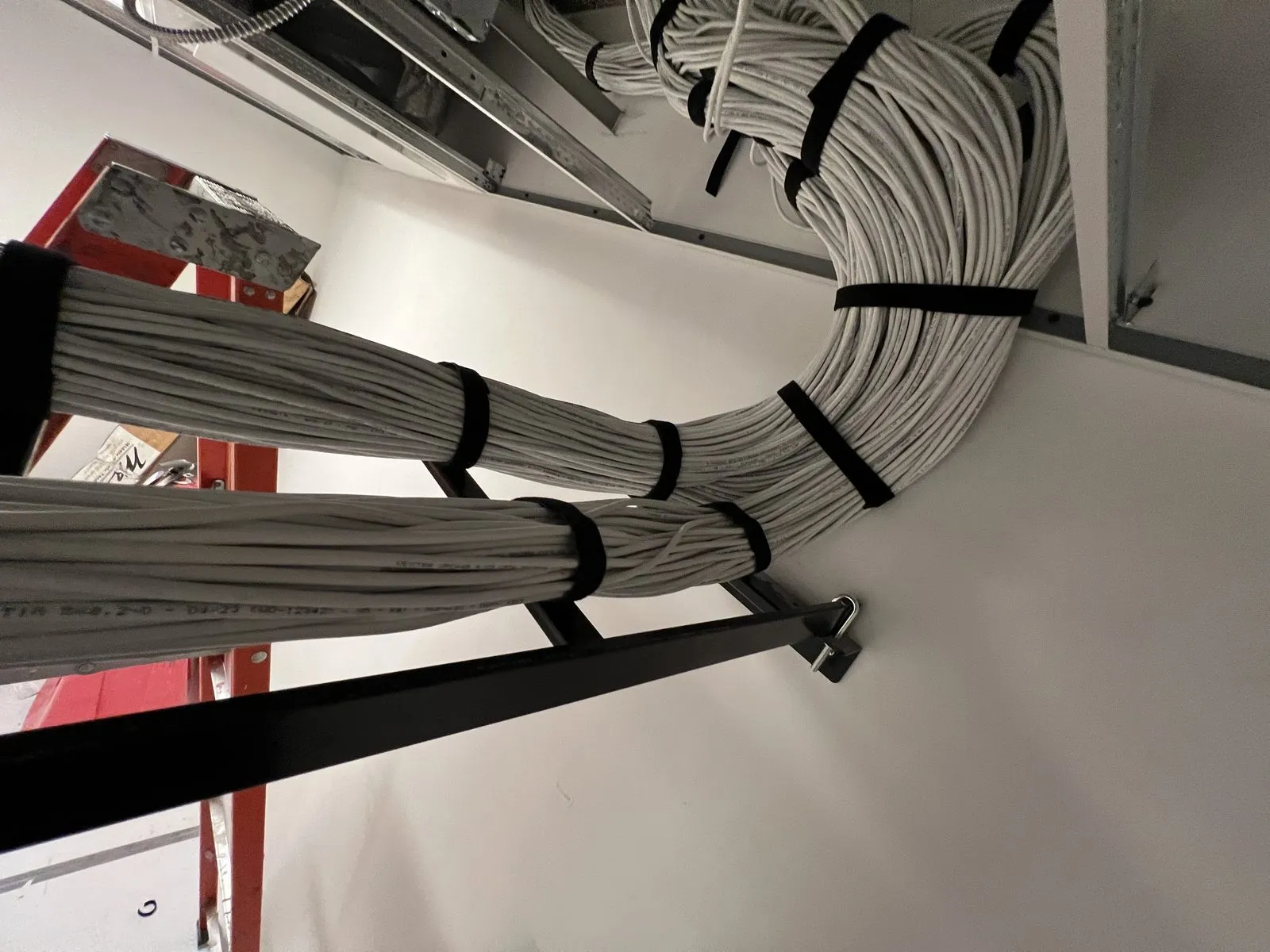
Structured Cabling & Low-Voltage Wiring — questions we get
Which Cat cable should I install — Cat 5e, Cat 6, Cat 6A, Cat 7, or Cat 8?
For most offices, Cat 6A is the right answer in 2026 — it supports 10 Gbps over the full 100 m, which gives you headroom for the next 10–15 years. Cat 5e is end-of-life for new installs. Cat 6 supports 10 Gbps only at shorter runs and is fine for very small offices. Cat 7 and Cat 8 are typically reserved for data center patch cords or specialty runs. We will recommend the right category based on the building, the run lengths, and the expected lifespan of the install.
Single-mode or multi-mode fiber — which do I need?
Multi-mode (OM3 or OM4) is fine for inside-building runs up to 300–400 m and is cheaper to terminate. Single-mode (OS2) is the right call for runs between buildings, runs over 300 m, or anywhere you want maximum future-proofing for 100 G or 400 G upgrades. We use OM4 as the default for inside-building backbone, OS2 for site-to-site and campus runs.
Do you run fire alarm cable too? Or do I need a separate vendor?
We pull fire alarm cable (FPLR for riser, FPLP for plenum) in coordination with your licensed fire alarm contractor. They own the panel, the devices, the terminations, and the AHJ inspection. We own the cable pathway, the fish-tape work, the conduit coordination with the electrician, and labeling. This split is typical on commercial buildouts in NYC and NJ — it keeps the licensure clean and the schedule tight.
What about burglar / intrusion alarm wiring?
Yes — we pull low-voltage alarm cable (NEC Article 725, typically 22-AWG twisted shielded) for door contacts, glass-break sensors, motion detectors, and keypad runs. We coordinate with the alarm-monitoring company on terminations and testing. If you do not have a monitoring vendor we can refer one.
Do you do speaker wire and distributed audio?
Yes — 14/16/18-gauge speaker wire for line-level and 70V / 100V distributed audio across restaurants, retail, lobbies, and large open offices. CL2 / CL3-rated cable where required by code. We run the cable, install the speakers (in-ceiling, pendant, surface-mount), and terminate to your amplifier or DSP. See the [Commercial AV service page](/services/commercial-av/) for the head-end and source equipment side.
Do you install RG-6 / RG-11 coax for cameras and CATV?
Yes. RG-6 for residential and most light-commercial CATV and CCTV. RG-11 for longer runs over 250 ft. We terminate to F-connectors, BNC for SDI surveillance, and provide compression-tool terminations rather than crimp where the install demands it.
What about HDMI runs longer than 50 feet?
HDMI over copper falls apart past about 50 ft for 4K. For longer runs we install HDMI fiber extenders (typically OM3 with HDMI 2.0 or 2.1 transceivers) or HDBaseT category cable (Cat 6A) with extender pairs. The right choice depends on the resolution, refresh rate, and HDR / HDCP requirements.
Do you provide certification testing?
Yes. Every copper drop is tested with a Fluke DSX-8000 certifier. Every fiber run is tested with an OLTS or OTDR depending on the length and the customer requirement. Results are delivered as a PDF report indexed to the as-built drawing — you can prove the cabling met spec the day it was handed over.
Plenum vs riser cable — does it matter?
Yes, and the AHJ will fail the inspection if it is wrong. Plenum-rated cable (CMP for data, FPLP for fire alarm) is required in any space that handles environmental air — most drop-ceiling plenums in commercial buildings. Riser-rated cable (CMR / FPLR) is for vertical runs between floors. PVC-jacketed (CM) is fine inside conduit. We default to plenum-rated for commercial work to avoid surprise findings.
Do you install during business hours or after?
Either. New-construction and major retrofit work happens on the GC schedule. Cut-overs in occupied offices are typically scheduled evenings or weekends to avoid disrupting your team. Most NYC commercial buildings require after-hours work for occupied spaces anyway.
Do you handle the conduit and core-drilling, or just pull cable?
Both. We install EMT conduit, sleeves through fire-rated walls (with fire-stop putty / pillows), J-hooks above ceiling, ladder rack in IDFs, and core-drill where needed. For larger structural work — through-wall penetrations in landmark buildings, exterior conduit on roofs — we coordinate with the GC and electrical contractor.
Structured Cabling & Low-Voltage Wiring — recent case studies
- Construction
Construction Firm Office Relocation: Cabling, Network, and Phones in One Weekend
A 35-person construction firm in Staten Island moved offices on a Friday evening and walked into a fully working environment Monday morning — cabling, switches, phones, AV, the whole stack.
Read more about Construction Firm Office Relocation: Cabling, Network, and Phones in One Weekend - Multi-Building Residential — Public Housing
Oak Park, Stamford CT: 305-Camera Multi-Building Surveillance Backbone
Network design, switch programming, and IP video surveillance integration across a 28-building multi-dwelling community in Stamford, CT — Phase 1 existing (75 cameras) integrated with Phase 2-3 expansion (~230 new cameras across 20 new townhome buildings on a redesigned 10G fiber backbone).
Read more about Oak Park, Stamford CT: 305-Camera Multi-Building Surveillance Backbone - Transportation & Logistics
Logistics Company Builds Out 28,000 sq ft Warehouse with Cameras, Access, and Wi-Fi
A growing 3PL company opened a new warehouse in northern New Jersey and engaged Sage to handle every piece of low-voltage and IT infrastructure: structured cabling, Wi-Fi, security cameras, access control, and the back-office network.
Read more about Logistics Company Builds Out 28,000 sq ft Warehouse with Cameras, Access, and Wi-Fi
Other services we deliver
Network Design & Multi-Site Engineering
Site surveys, network architecture, multi-building campus design — built right the first time.
Read more about Network Design & Multi-Site EngineeringSecurity Cameras, Access Control & Multi-Site Surveillance
IP cameras, access control, alarm, and multi-building campus surveillance — designed and supported by your IT team.
Read more about Security Cameras, Access Control & Multi-Site SurveillanceDAS / In-Building Wireless
Passive DAS, hybrid DAS, and ERRCS/BDA public safety systems — cell signal and first responder coverage for commercial buildings.
Read more about DAS / In-Building Wireless
Structured Cabling & Low-Voltage Wiring for your industry
Structured Cabling & Low-Voltage Wiring across the NY & NJ metro
Local pages with neighborhood-specific detail for structured cabling & low-voltage wiring.
Ready for IT that does not surprise you?
A 30-minute call. No slide deck. We will tell you what looks healthy, what looks risky, and what we would do first.