What Commercial AV Looks Like When It's Done Right
Real finished commercial AV installs across NY and NJ — conference rooms, huddle spaces, and hospitality venues — plus the structured cabling, network, and control work that makes them just work. From an MSP that does the whole low-voltage stack.
You notice commercial AV exactly twice: when it works so well you forget it is there, and when it does not and three people are crouched behind a TV at 9 a.m. while the room waits. We build the first kind. Here is some of our finished commercial AV work across NY and NJ — conference rooms, huddle spaces, and hospitality venues — plus a look at the part nobody photographs: the cabling, network, and control behind the screen that actually makes it work.
Conference rooms and boardrooms
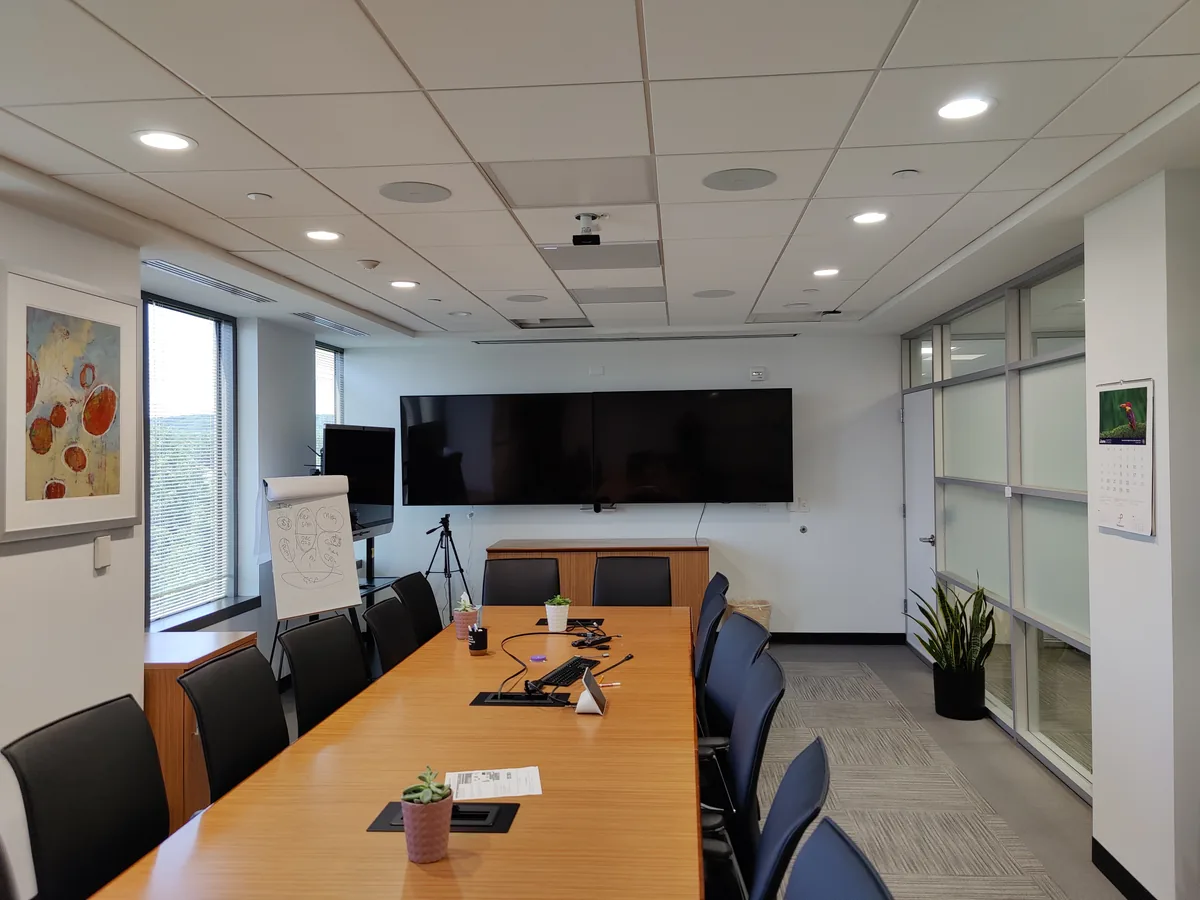
The conference room is where AV earns its keep. A room that “just works” looks simple: walk in, one touch, you are on the call. Getting there is a stack of decisions. Single or dual displays sized to the room and the back row. A camera that frames the table instead of the ceiling. Ceiling microphones that pick up the quiet person at the far end without picking up the hallway. Front-of-room audio that is clear without distorting. Touch-panel control obvious enough that a guest can run it.
We build these as Zoom Rooms and Microsoft Teams Rooms, tied into M365 or Google Calendar so the room shows the day’s schedule and joins the booked meeting with one tap. No laptop juggling, no “which cable is this,” no scramble while the executives watch a black screen.
Huddle rooms and small spaces
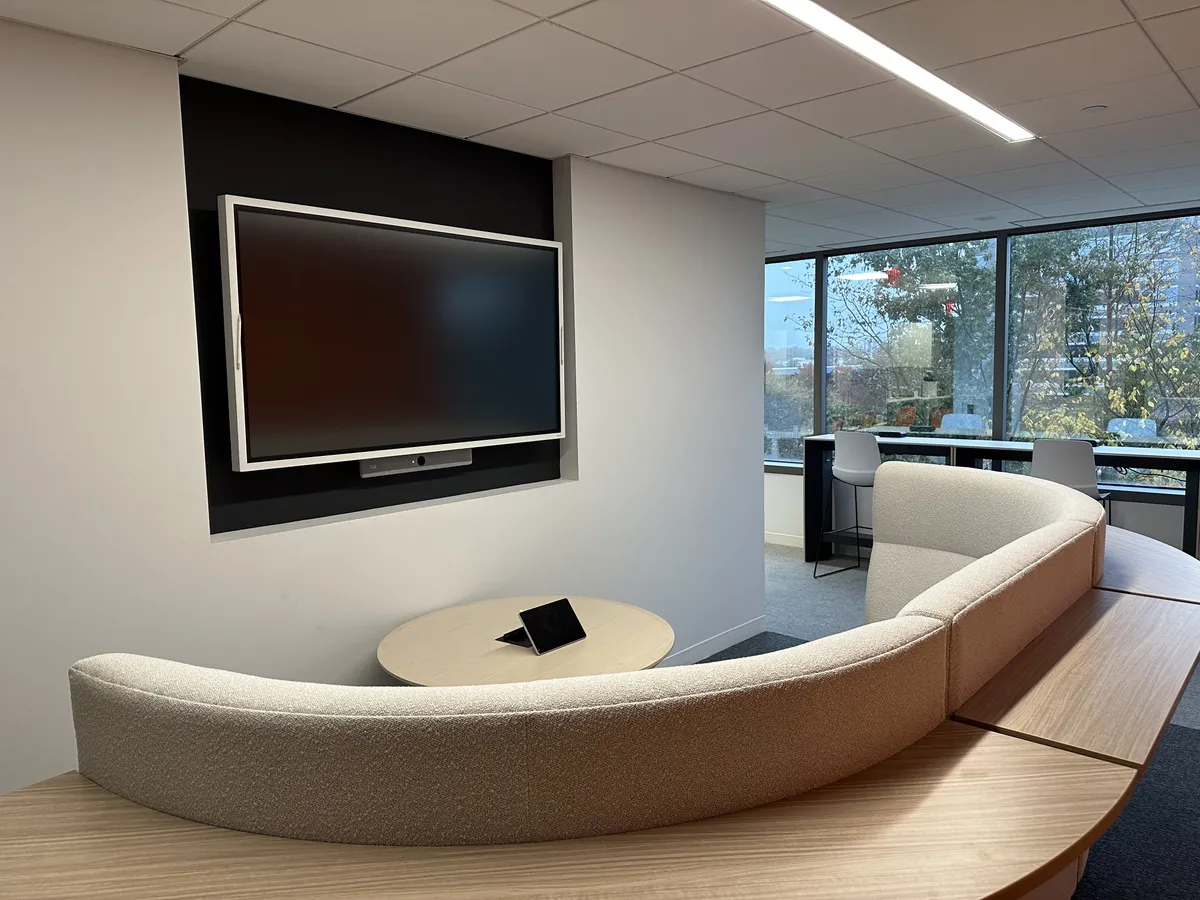
Not every meeting needs a boardroom. Huddle rooms and two-person spaces do more of the day-to-day work, and they are where an all-in-one board shines. A Cisco Webex or Microsoft Teams board puts the display, camera, mics, and speakers in a single unit that mounts to the wall and runs the call by itself. Less to install, less to break, and the same one-touch join. For a lot of offices these are the highest-value rooms we build, because they get used constantly.
Bars, lounges, and hospitality venues
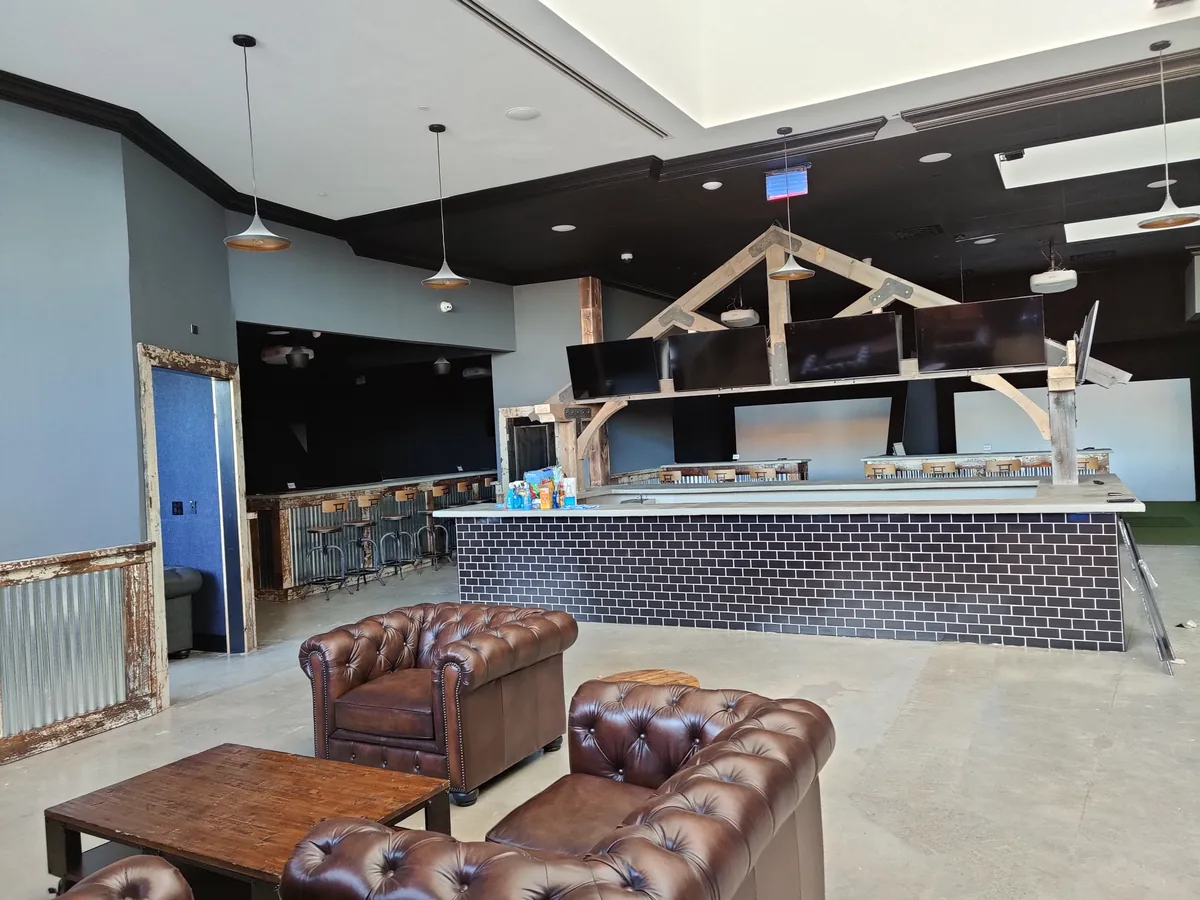
Hospitality AV plays by different rules. The displays are part of the room’s design, not bolted on after the fact: multiple screens over a bar on a custom mount, sightlines worked out so every seat sees one, lighting that matches the mood instead of fighting it.
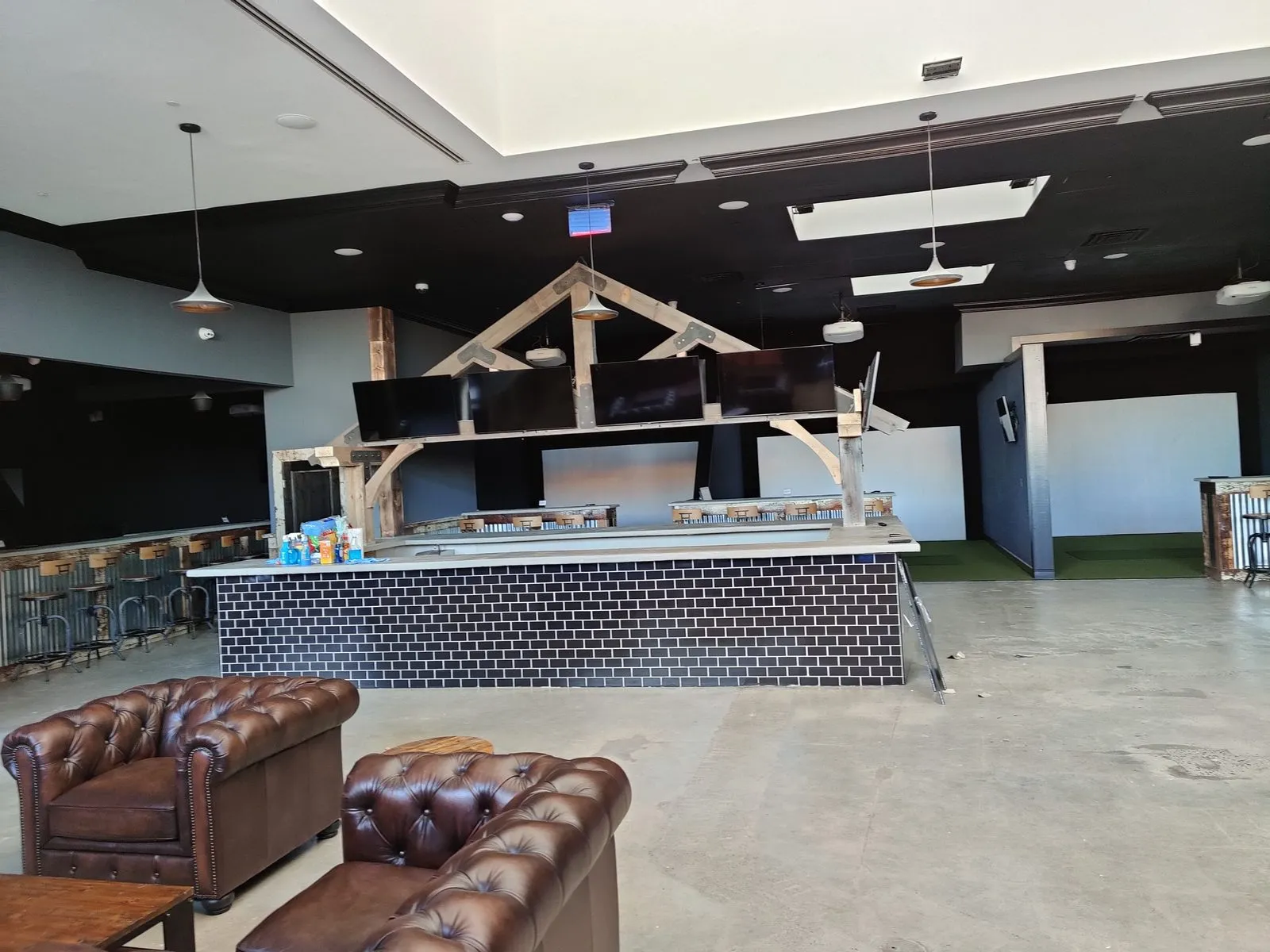
Underneath the screens is the part guests never think about: multi-zone audio, so the bar, the lounge, and the patio can each run a different source at a different volume, on a control simple enough for the staff to actually use. Streaming sources, a DJ input for the evening, speaker coverage planned so there is no dead spot and no blown-out corner. When we run a venue as a design-build, the AV, the lighting, and the structured cabling get planned together, so it lands once and looks intentional.
Lounges, offices, and digital signage
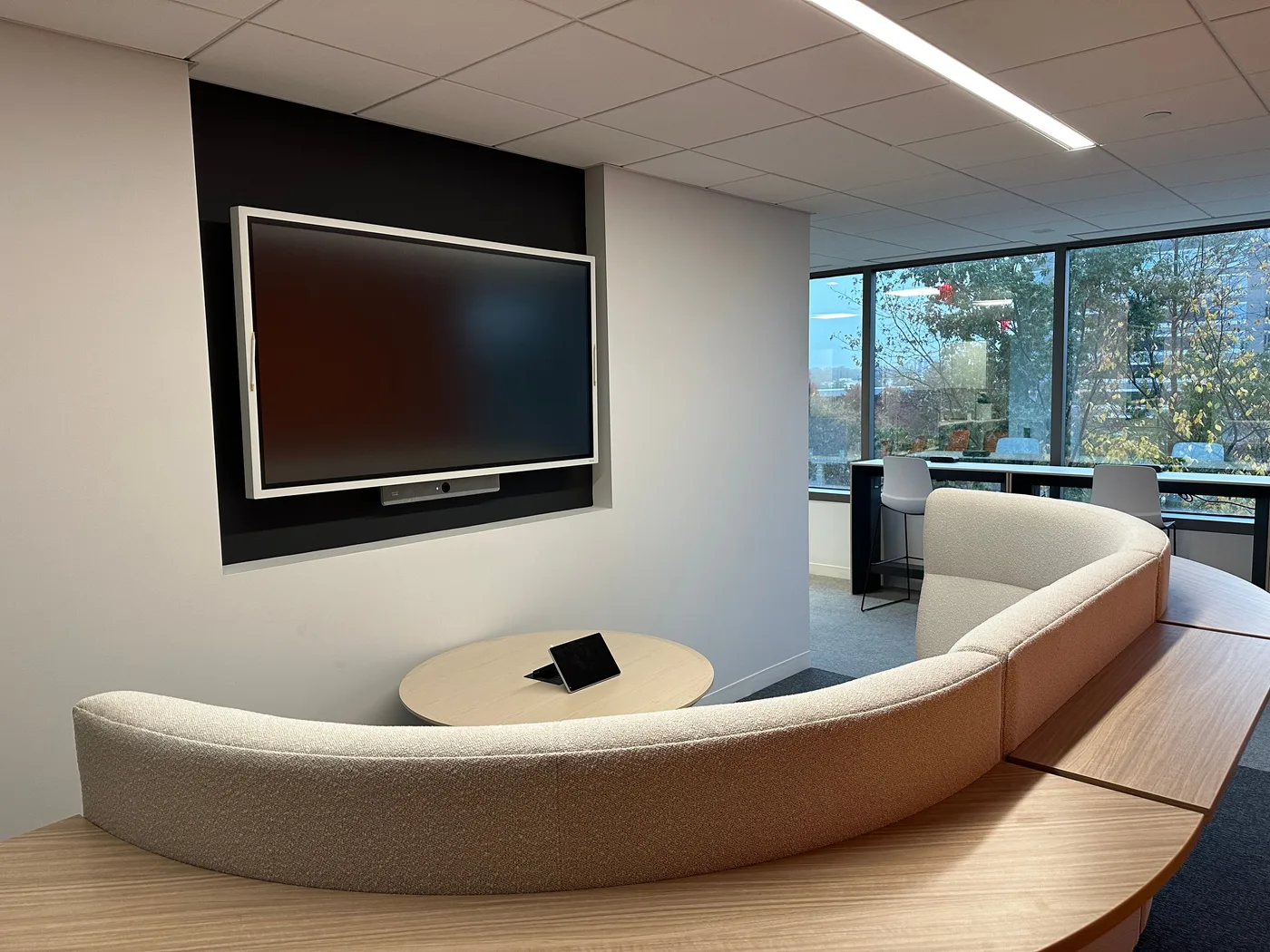
The same thinking scales down to a lounge display, a reception video wall, or menu and signage screens across multiple locations. The goal does not change: the gear is clean, the cabling is hidden, and someone non-technical can run it. A display that looks like it belongs on the wall, not like it was hung there yesterday.
The part nobody photographs
Here is the honest version: the screen is the easy part. What makes commercial AV actually work is everything behind it.
- Structured cabling. Every display, camera, mic, and speaker needs a clean, certified run back to the rack. We pull and dress the low-voltage cabling ourselves, so there is no finger-pointing between the AV installer and the cabling crew when a drop comes up dead.
- The network. Zoom Rooms, Teams Rooms, streaming audio, and IP cameras all live on the network. We design it segmented so the AV traffic does not fight the business traffic, and a busy room does not drop a call.
- Mounting and concealment. Displays mounted level and solid, cables in-wall or in raceway, power and data where they need to be. The difference between a professional install and “someone’s cousin did it” is mostly here.
- Control that survives staff turnover. The fanciest system is worthless if only one person knows how to run it. We standardize on control anyone can pick up, and we train the room before we leave.
That is why we do the whole stack — AV, cabling, and network — as one team. One vendor, one schedule, and one warranty conversation if anything ever goes wrong.
Want this in your space?
If you are fitting out a conference room, opening a venue, or finally fixing the room everyone dreads, that is the conversation we have on a free 30-minute assessment. We design and install commercial AV, conference rooms, and whole-building audio across NY and NJ — and we run the structured cabling and network underneath it, so it all works together.
Written by
Founder of Sage Solutions. 20+ years in NY/NJ IT and low-voltage, Certified Ethical Hacker (CEH), and ex-FDNY. More about Jason →
Keep reading
- Help
Why Is My Computer So Slow? The Honest Answer for a Work PC
Slow computer at work, slow startup, slow Windows 11. What actually causes it, what you can fix in ten minutes, and how to tell when the machine is simply finished.
Read more about Why Is My Computer So Slow? The Honest Answer for a Work PC - Help
Microsoft Teams Not Working: Fixes for the Five Common Failures
Teams will not load, will not open, will not send messages, or has stopped showing notifications. What each symptom usually means and how to clear the cache on the current Teams client.
Read more about Microsoft Teams Not Working: Fixes for the Five Common Failures - Help
OneDrive Not Syncing: What Is Actually Blocking It
OneDrive stuck syncing, missing from File Explorer, or refusing to sign in. The real limits that block files, the reset command that fixes most of it, and what to check before you touch anything.
Read more about OneDrive Not Syncing: What Is Actually Blocking It
Want to talk about this?
We are happy to have a 30-minute call about anything in this article — your environment, your risks, your options.