12-Location Restaurant Group Recovers from Ransomware in 11 Days
A multi-location restaurant group switched MSPs after a ransomware near-miss. We rebuilt their security stack, network, and POS infrastructure across 12 sites in under two weeks.
0
Days of POS downtime after engagement
11
Days to full recovery and hardening
$0
Paid in ransom
12 / 12
Locations on segmented PCI-aware network
Timeline
11 days from first call to fully restored, hardened, and documented
Services used
The challenge
A multi-location restaurant group with 12 sites across NYC and northern NJ called us on a Friday afternoon. Their previous MSP had warned them about a likely ransomware compromise on a back-office server at the corporate office, but had not contained it. The POS network was on the same flat VLAN as the back office. By Monday morning, two locations could not process credit cards, and the corporate finance team could not access QuickBooks or payroll. The group's leadership was three weeks away from a major investor review. Downtime was unaffordable. Paying a ransom was off the table — they had no idea what was actually compromised, and their cyber insurance carrier needed full forensics before any decision.
What we found in the first 24 hours
The compromised server hosted a legacy line-of-business app that the back office used for inventory and labor reporting. Patient zero appeared to be a phishing email two weeks earlier — a finance manager had entered M365 credentials into a fake Microsoft login page. The attackers had not yet deployed encryption widely; they were in the data-exfiltration phase, looking for the most valuable files.
The network was flat. Guest Wi-Fi at the locations shared the same VLAN as the POS. Two of the 12 locations had POS endpoints with default admin passwords. There was no MFA on M365. EDR was a free version of Windows Defender. Backups existed but had not been tested in 18 months.
For a restaurant group this size, the attack surface was wide open and the cybersecurity posture was effectively nonexistent.
What we did, in order
- Contained — disconnected affected endpoints from the network, paused all M365 cloud sync, isolated affected segments.
- Verified backups — surprisingly, the off-site Datto backups were intact. We tested by restoring to an isolated environment and confirmed integrity.
- Notified the cyber insurance carrier and engaged breach counsel. The carrier authorized a forensic firm.
- Rebuilt — every affected endpoint was wiped and rebuilt from clean image. We restored data only, not full systems.
- Identified the entry vector definitively (credential phishing) and reset every M365 password with MFA enforcement.
- Rolled out CrowdStrike EDR to every workstation and server across 12 locations.
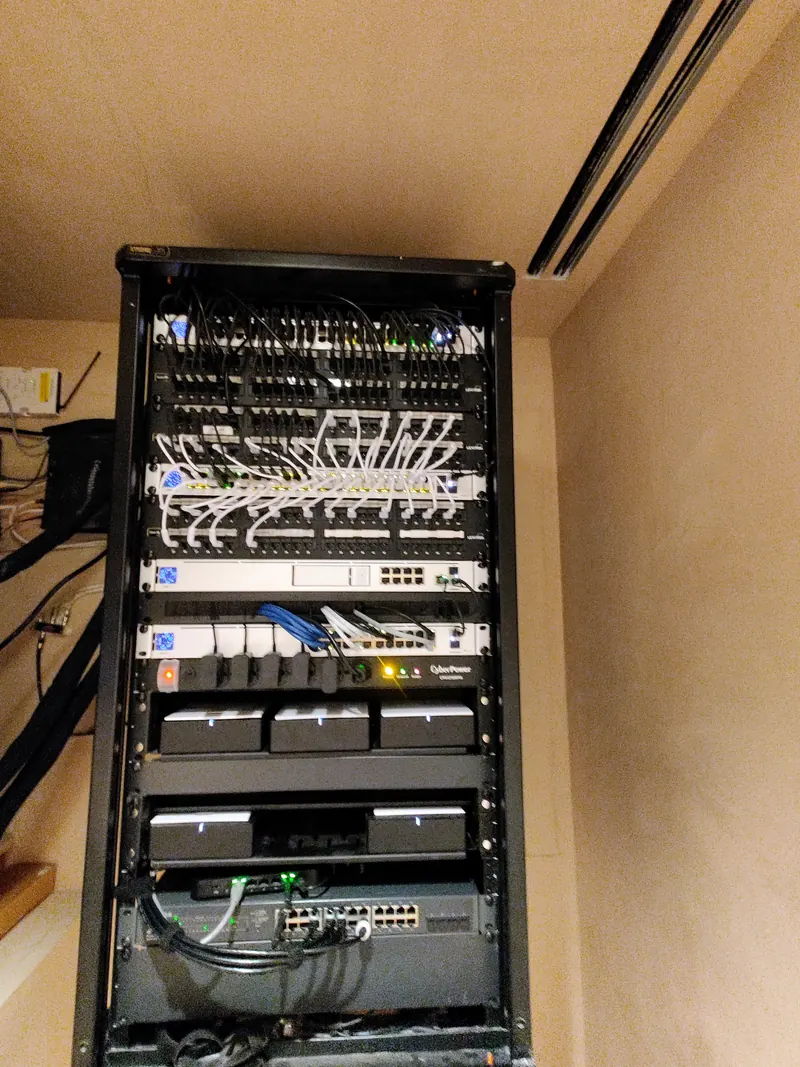
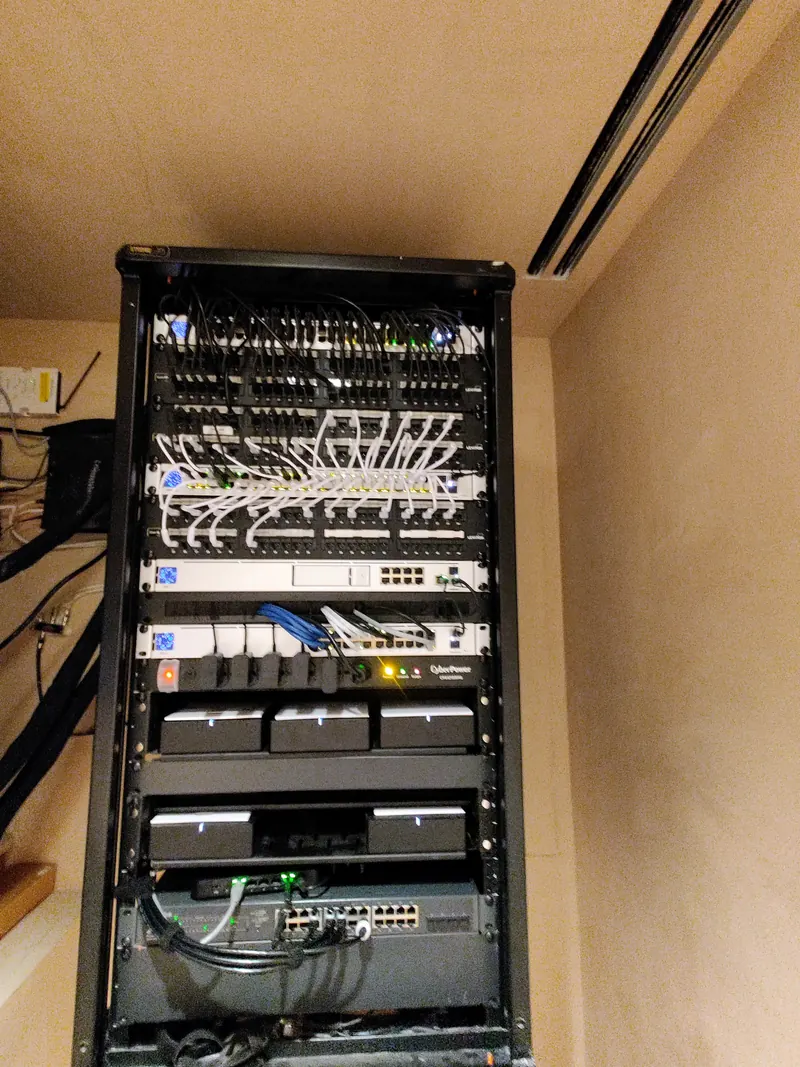
- Network redesigned and re-cabled at every location: new VLANs for POS, back office, guest, and IoT, with firewall rules enforcing segmentation.
- Deployed Cisco Meraki firewalls, switches, and APs at every location with centralized management.
- Replaced Datto with a proper BCDR architecture: image-based local backup, off-site replication, immutable retention.
- Onboarded leadership and management on KnowBe4 with monthly phishing simulations.
- Documented everything: as-built network diagrams, runbooks, vendor contacts, and an incident response plan.
How recovery hit 11 days
The 12-location piece was the hard part. Standardization saved us — same Meraki SKU at every site, same VLAN scheme, same firewall config templated and deployed. Two senior engineers traveled to two locations a day with pre-staged equipment; sites were cut over after-hours so morning service was uninterrupted. Backups were tested at every location before we left.
Two years later
Zero incidents. The investor review went forward on schedule. The group has since added two more locations using the same standardized template, and onboarding a new location now takes 3–5 days instead of weeks.
Gallery
Stack we used
- CrowdStrike Falcon EDR
- Microsoft 365 Business Premium
- Datto BCDR with immutable backup
- Cisco Meraki firewall + switch + AP
- Toast POS (PCI scope)
- KnowBe4 phishing training
"Switched from a national MSP after a ransomware scare. Sage rebuilt our defenses in 11 days. Two years later, zero incidents and our team finally stops calling about email."
More case studies
- Construction
Construction Firm Office Relocation: Cabling, Network, and Phones in One Weekend
A 35-person construction firm in Staten Island moved offices on a Friday evening and walked into a fully working environment Monday morning — cabling, switches, phones, AV, the whole stack.
Read more about Construction Firm Office Relocation: Cabling, Network, and Phones in One Weekend - Healthcare
Healthcare Practice Scales 12 → 47 Endpoints with HIPAA-Aware IT
A growing NJ healthcare practice migrated to Microsoft 365, segmented its network, and tripled its endpoint count without IT growing pains or compliance gaps.
Read more about Healthcare Practice Scales 12 → 47 Endpoints with HIPAA-Aware IT - Multi-Building Residential — Public Housing
Oak Park, Stamford CT: 305-Camera Multi-Building Surveillance Backbone
Network design, switch programming, and IP video surveillance integration across a 28-building multi-dwelling community in Stamford, CT — Phase 1 existing (75 cameras) integrated with Phase 2-3 expansion (~230 new cameras across 20 new townhome buildings on a redesigned 10G fiber backbone).
Read more about Oak Park, Stamford CT: 305-Camera Multi-Building Surveillance Backbone
Want results like these?
A 30-minute call gets you a written assessment in 48 hours.